
Validated outcomes
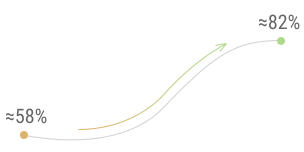
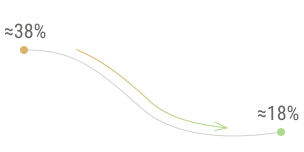
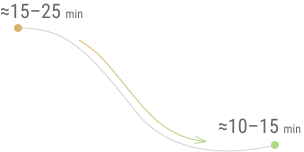
Average request completion time
About
Geomatikk is an excavation request system that helps contractors register planned digging work so underground infrastructure can be checked before excavation begins.
I redesigned the flow with a mobile-first approach to help users submit accurate requests on-site faster.
Problem
* Internal findings showed that 38% of requests contained inaccuracies, leading to field clarifications, follow-ups, and inspection delays
Design approach
I started by understanding how the request process worked in real conditions and reframed the problem as a workflow challenge, not just a form redesign.
I explored alternative flow directions, prototyped the strongest option, and refined it through client feedback and usability testing.
Workflow analysis
Found unnecessary steps and problem areas in the flow
User interviews
Showed how contractors submit requests and where they get stuck
Competitor analysis
Highlighted better tools for marking work areas on the map
Key insights
1
About 50% of request quality depends on accurate work area marking, but the current flow makes this step too complex
2
Contractors submit requests on-site, often under time pressure and mostly on mobile devices
3
Different request types are mixed in one flow, making the request path harder to understand
Hypothesis
Key decision
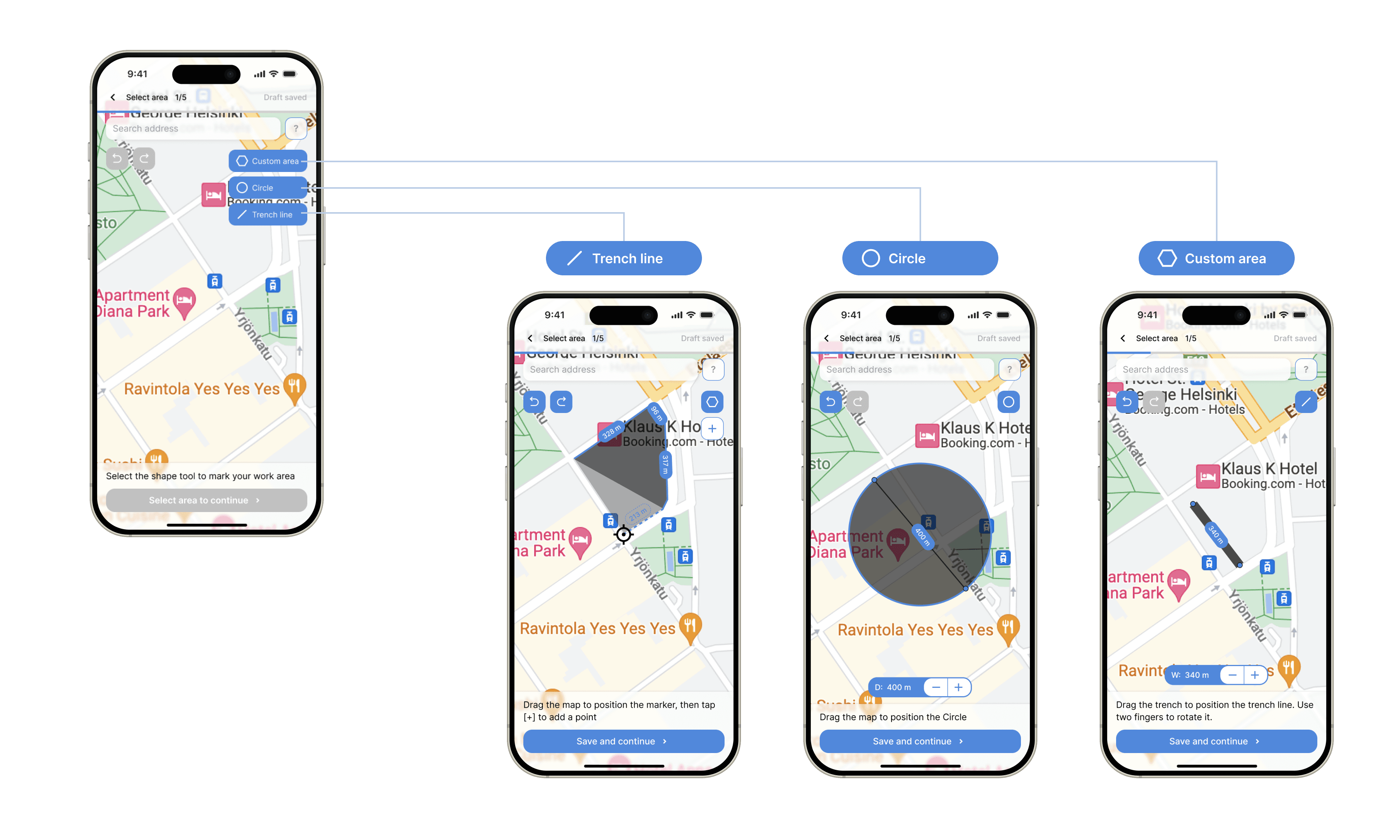
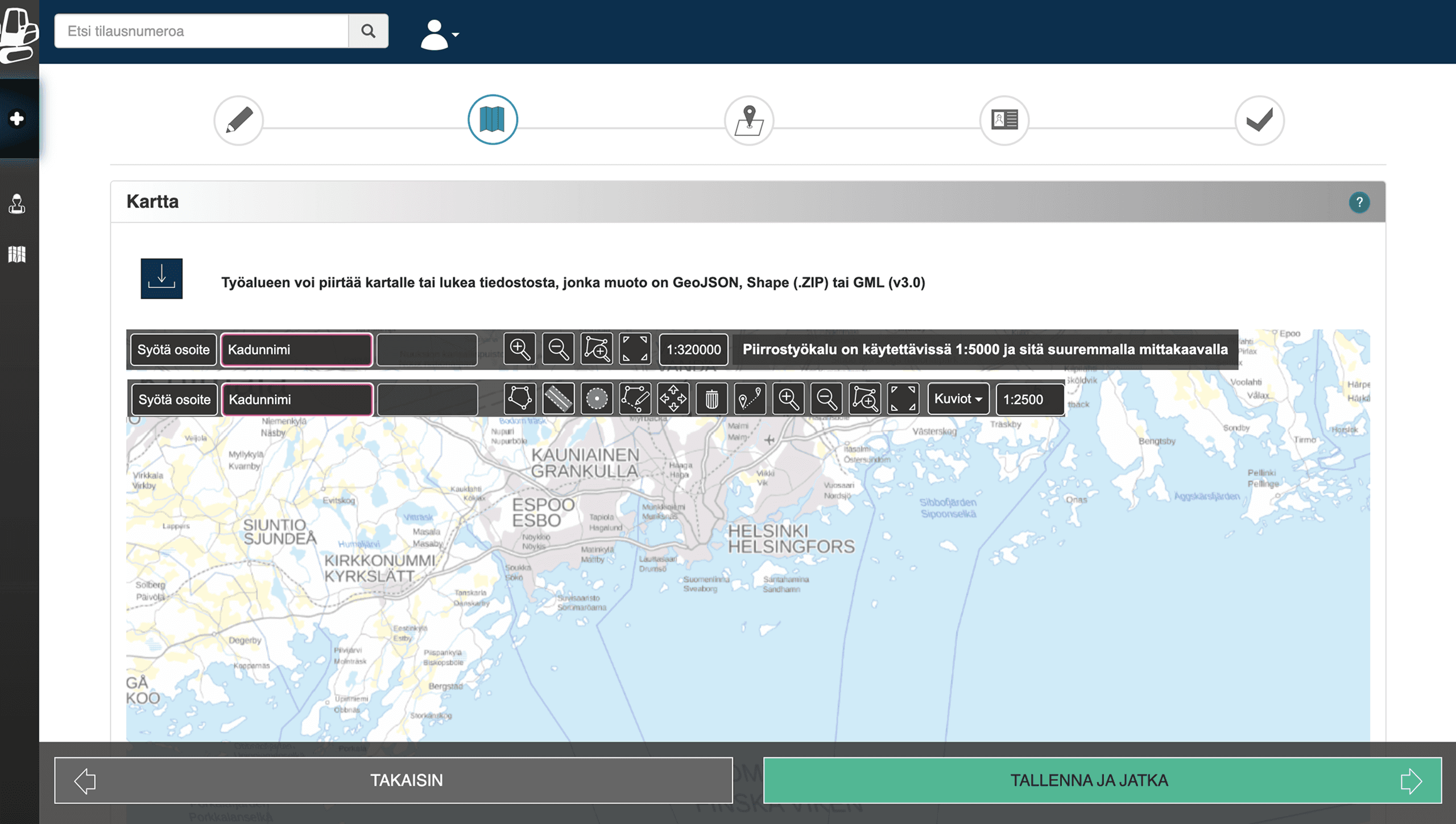
Make the map the starting point of the request flow.
Solution
I redesigned the request flow with a mobile-first approach, using the on-site request scenario as the baseline.
Restructured the request flow
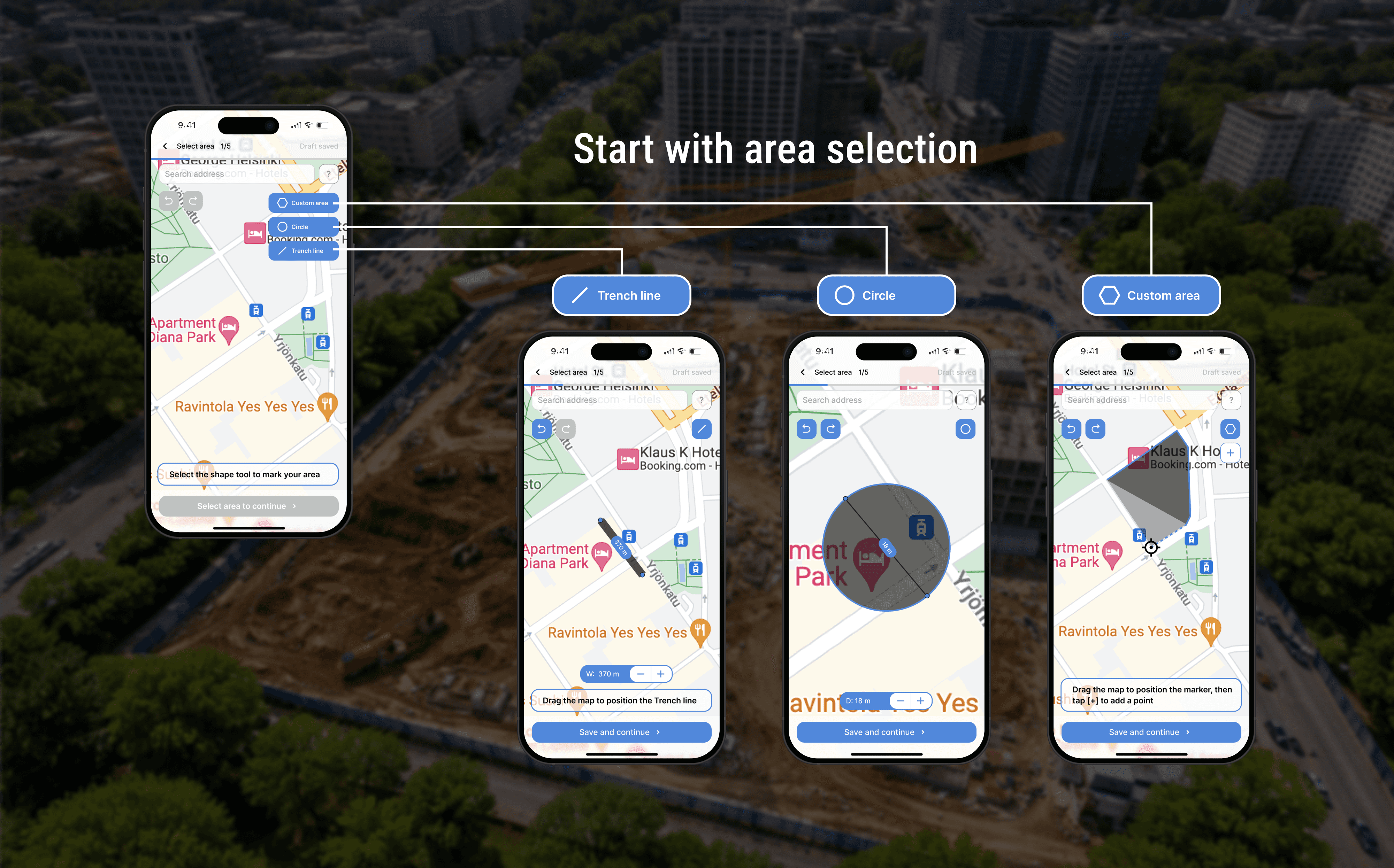
– Made work area selection the first step
– Separated emergency and standard requests
– Moved paid services to a later step
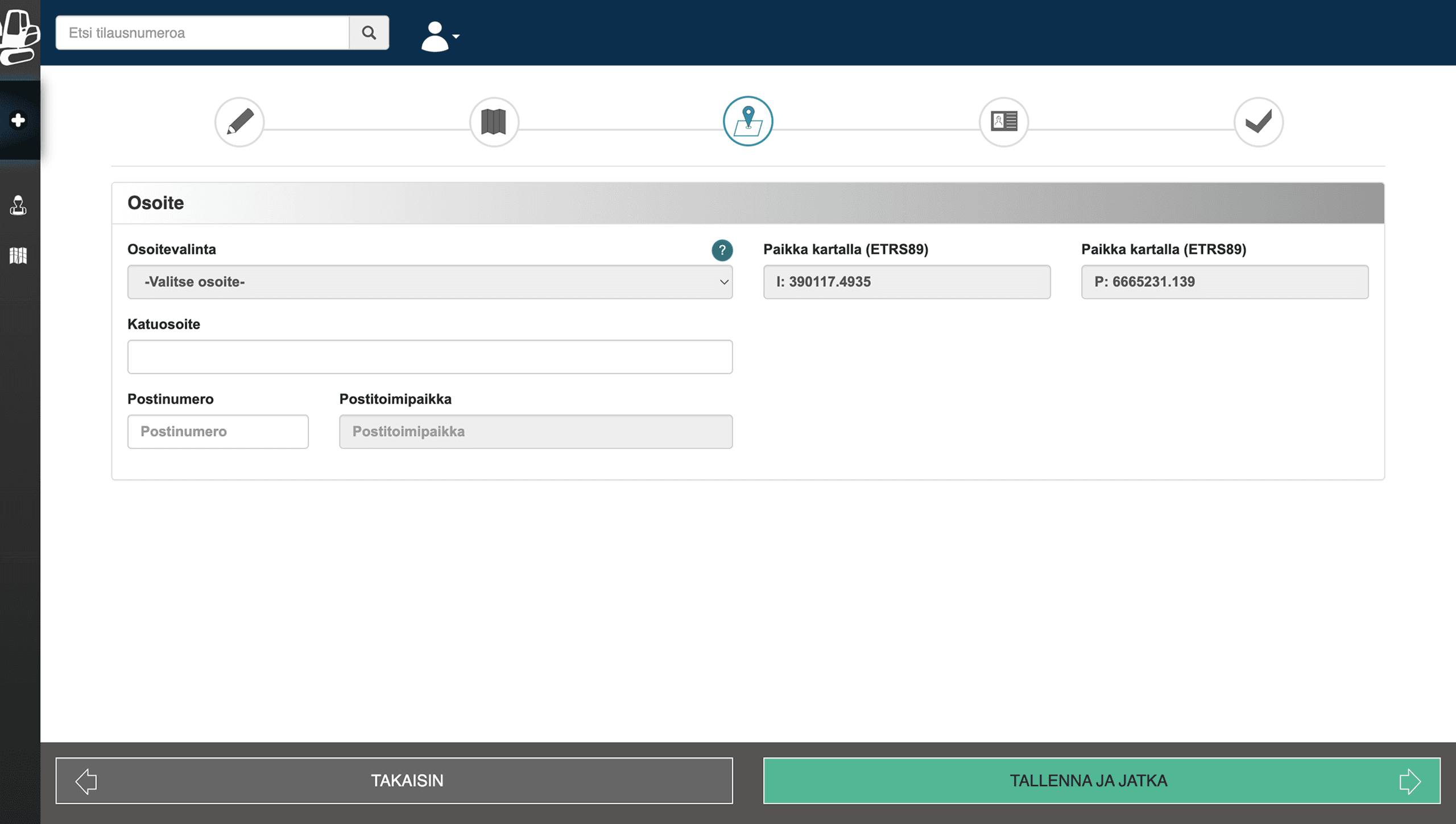
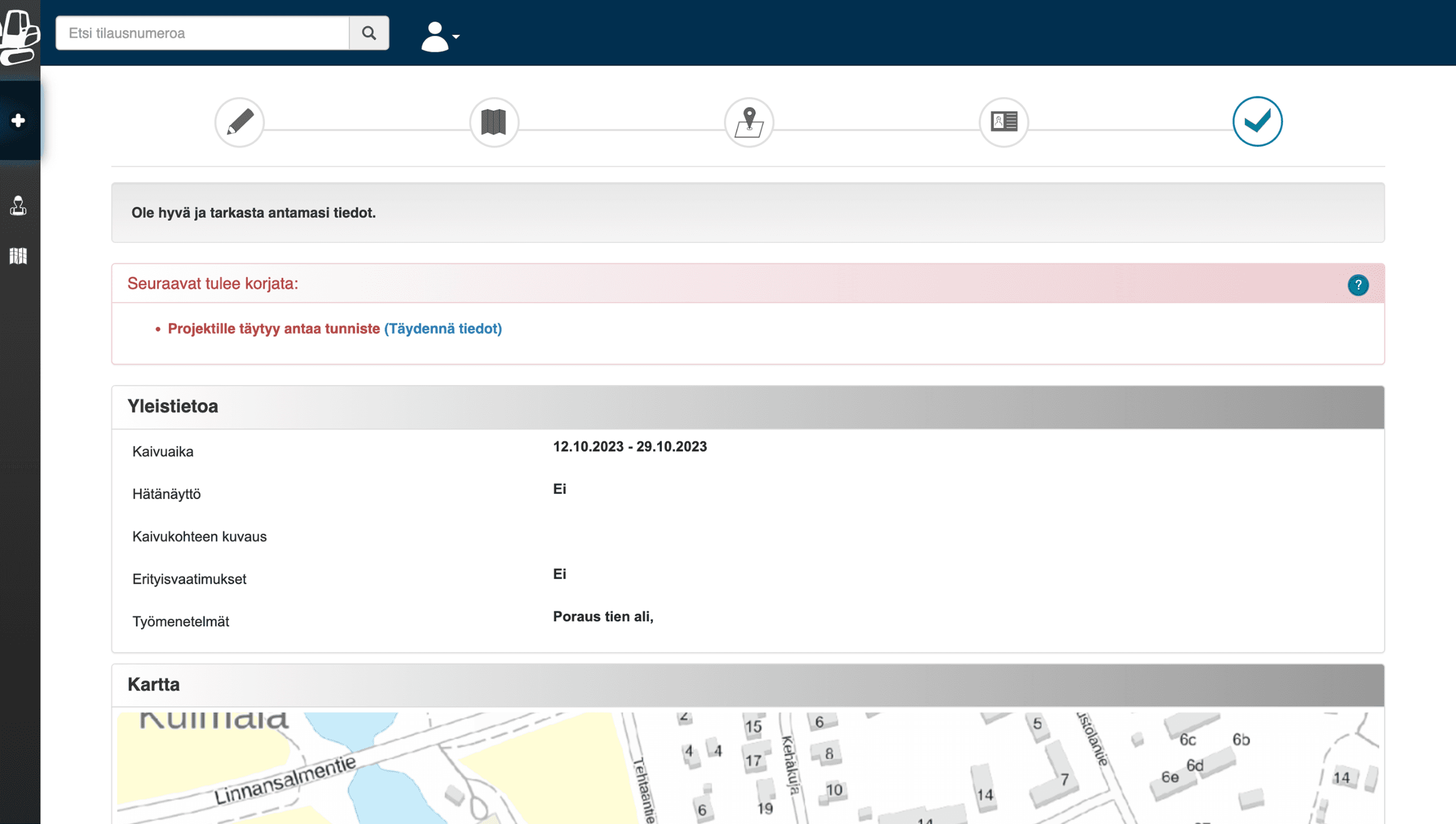
– Grouped remaining fields into clearer steps
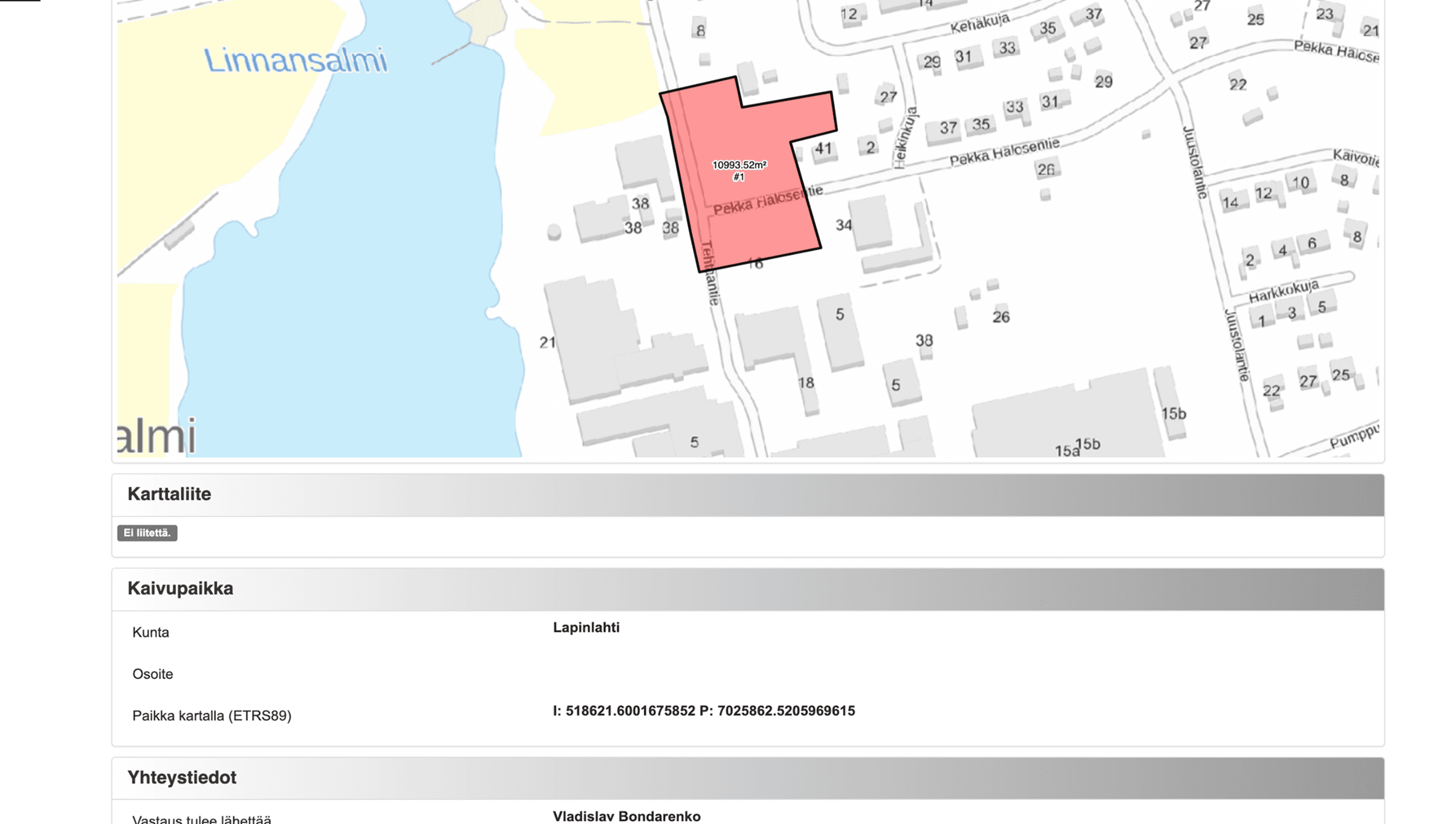
Added map-based area selection
Showed how contractors submit requests and where they get stuck
Competitor analysis
Highlighted better tools for marking work areas on the map
1. Restructuring the request flow
– We restructured the excavation request into a clear step-by-step process
– Work area selection became the first and core step
– We separated emergency and standard requests to reduce friction in urgent cases
– Paid services were moved to a separate step to keep the flow focused while improving visibility of paid options
Evidence
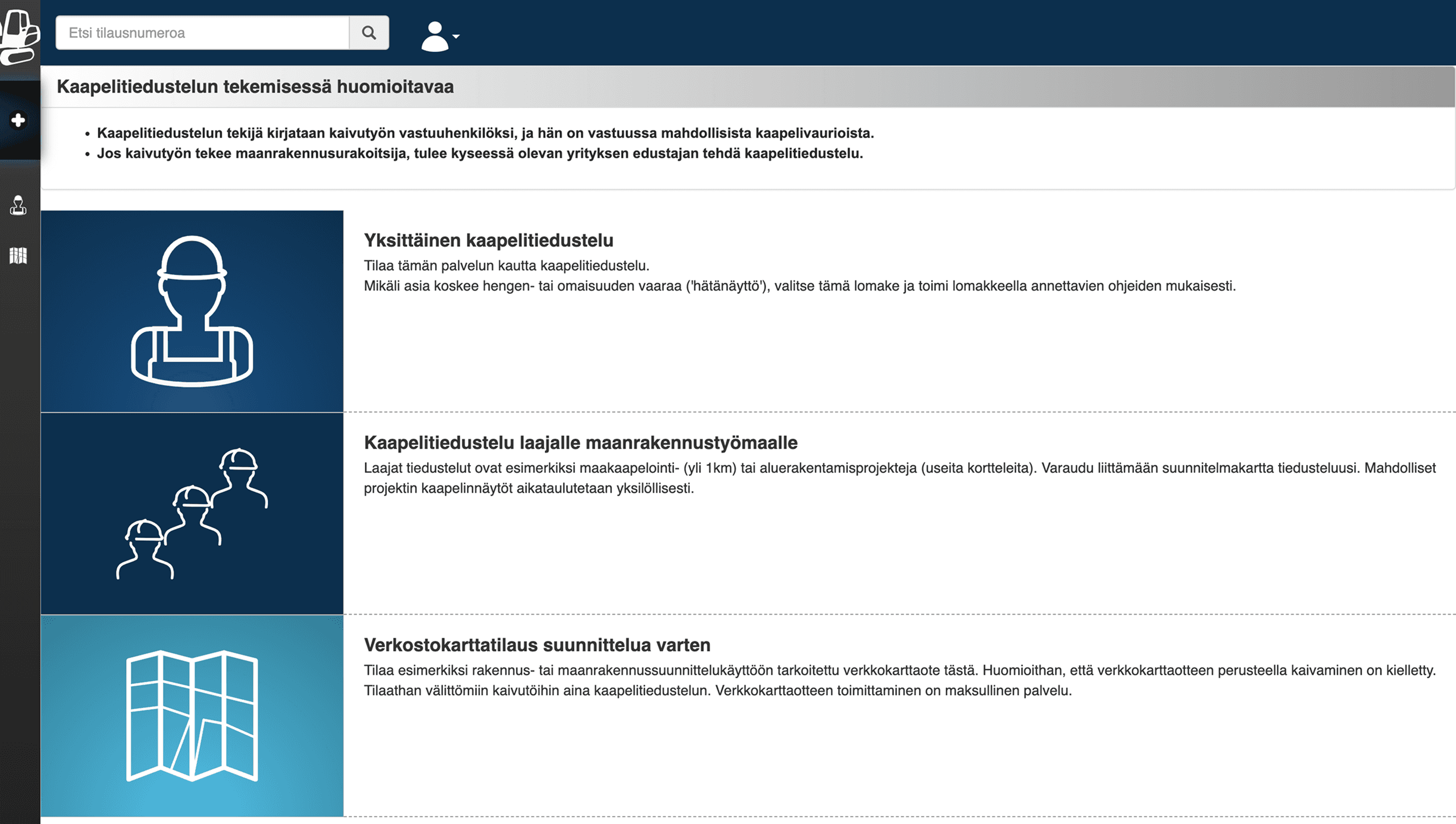
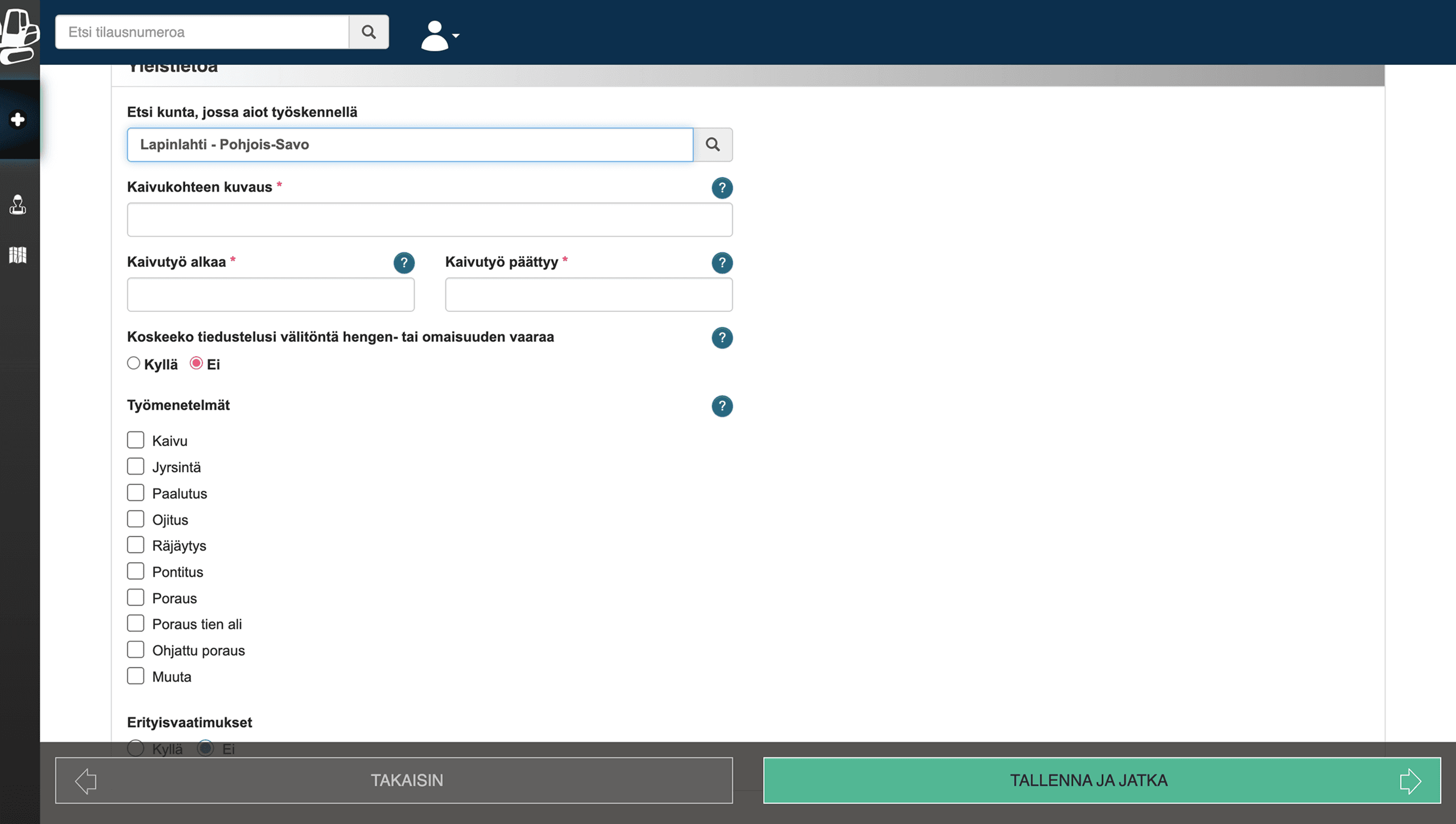
As a result, many requests were submitted with inaccuracies. Internal findings showed that around 35–45% of requests did not accurately reflect the actual excavation area or site conditions, requiring specialists to adjust and clarify details during field visits. This led to frequent follow-ups, additional coordination, and delays in the inspection process.
"I've worked with Derek on transforming our digital presence, and he was essential to our growth. He has this ability to understand business challenges, not just make things look pretty. Derek built custom solutions that streamlined our processes and made our team more efficient. Working with him was seamless and professional."

Mikhail Petrov
Product Manager
